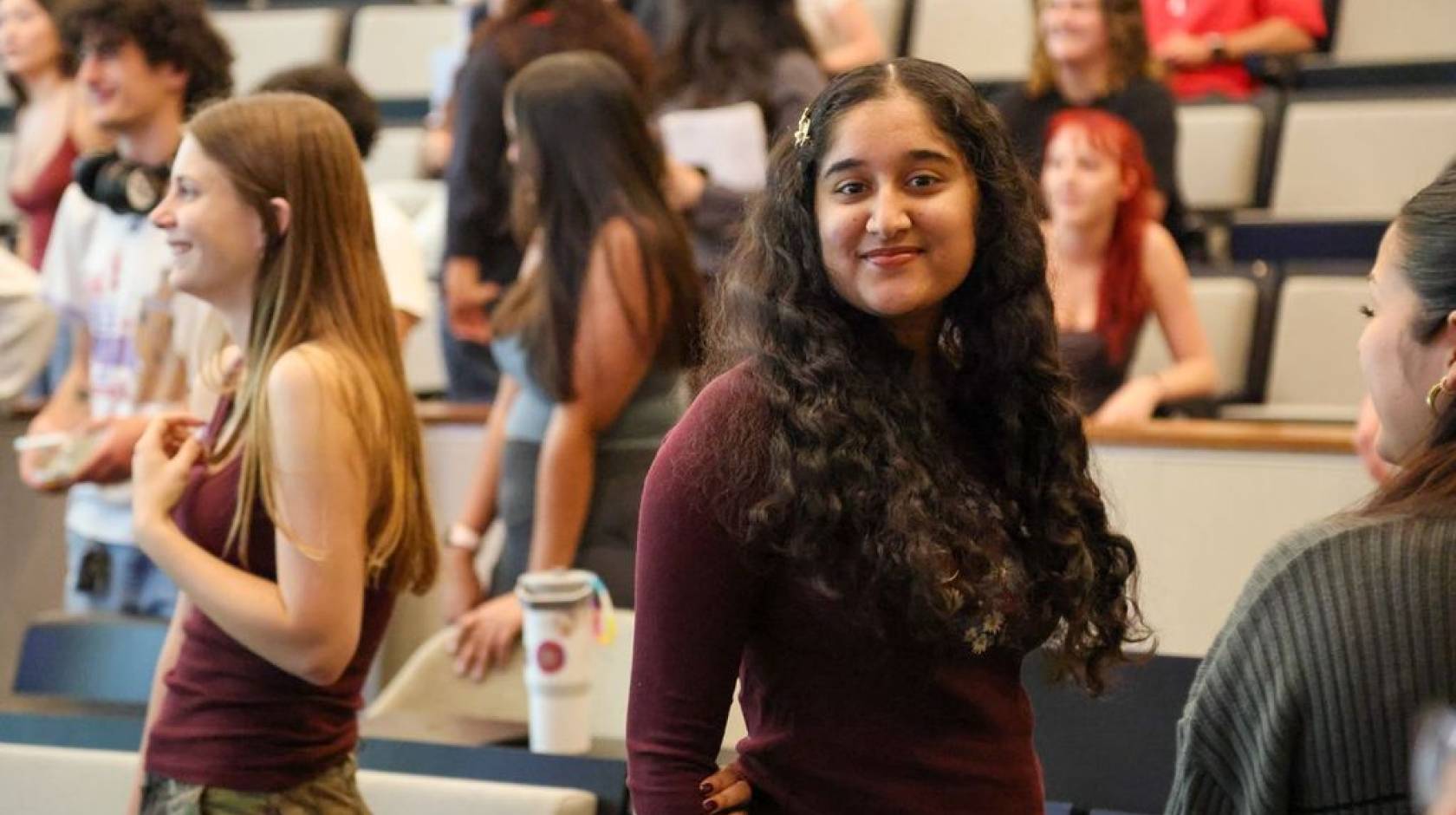
Launched this spring by the Humanities Division, “What Can I Do with My Degree? Humanities-Powered Jobs” introduces students to the professional possibilities of a humanities education while helping them develop collaboration, leadership, and communication skills that extend far beyond the classroom.
The two-unit course, offered as LIT 87H / HIS 87H, enrolled 126 students in its first quarter. It fulfills the PR-E (Collaborative Endeavor) general education requirement and is open to students from all divisions — a reflection of a core premise behind the class: that humanities skills increasingly matter across professions and sectors.
Students interested in fields such as literature, history, philosophy, languages, and the arts are often confronted with a familiar, well-meaning but nettlesome question from parents, peers, and even strangers: “What are you going to do with that humanities degree?”
The course answers that question directly, while challenging the assumptions behind it.
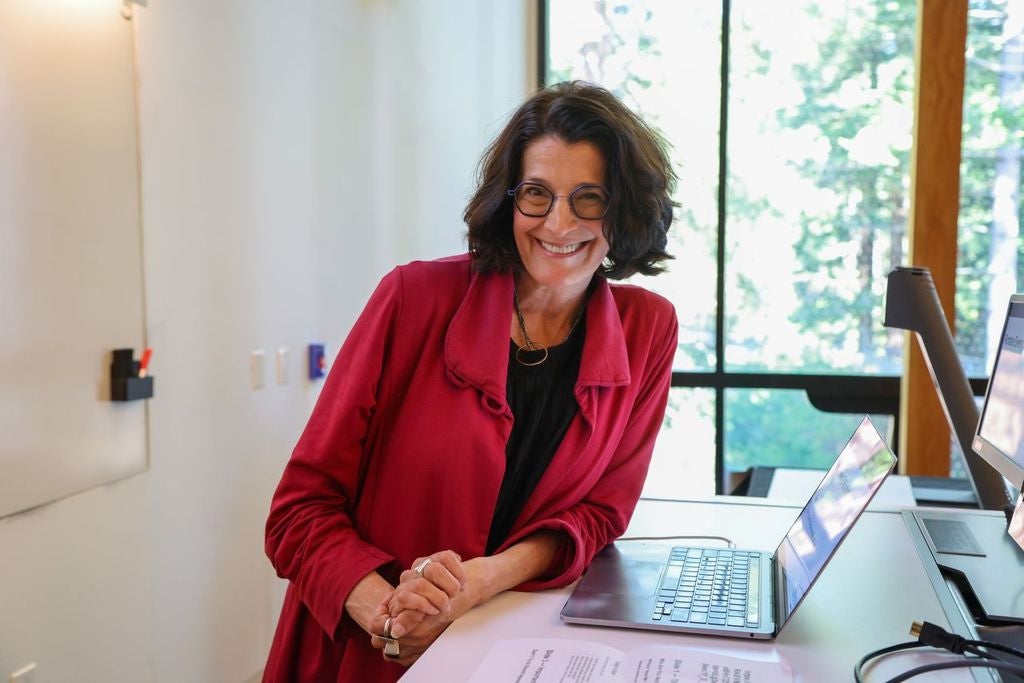
“It was important to me not to separate career preparation from the bigger questions at the heart of a humanities education because most students are already thinking about both,” said associate teaching professor Jody K. Biehl, who created the course in collaboration with Meredith Pelrine, career engagement specialist for the Humanities Division.
Biehl said students often arrive in office hours and class discussions thinking about what they can do with a humanities degree while pondering larger questions about what kind of life they want to lead and what truly matters to them. The humanities naturally creates space for both conversations, Biehl said.
“A student studying literature or history is learning how people make decisions, how societies change, how language shapes the world, how power works, and how humans find meaning and connection,” Biehl said. “Those are life skills as much as academic ones. They are also incredibly useful in the workplace.”
Focus and fulfillment in the era of ChatGPT
Reya Kartik (Crown, psychology, ’29) said the class shifted her focus toward long-term fulfillment rather than job titles alone.
“Hearing about different career paths showed me that careers are rarely linear and that people often combine multiple interests throughout their lives,” Kartik said. “It made the future feel less rigid and helped me realize that uncertainty does not mean failure. This class definitely changed how I think about balancing ambition, meaning, and personal happiness.”
Himmut Chatha (Stevenson, psychology, ’29) spoke about the growing relevance of the humanities in an era of artificial intelligence, when it has become all too easy to outsource writing — and critical thinking — to large language models.
“The essence of the humanities is putting a microscope up to human authenticity, and as AI becomes heavily normalized in writing spaces, it’s the humanities that teaches students how to pick apart what’s real or not,” Chatha said.
Chatha called the class “integral” for any student majoring in humanities. “Students need that extra push to know that their efforts aren’t for naught,” Chatha said. “The skills they develop and the things they are capable of will make them shine in the job market. It will especially set them apart from those dependent on AI models.”
Flipping the script
Part of the course’s mission is helping students recognize the broader value of skills they may already possess, Biehl said.
“I wanted this course to help flip the script — to show students that the ability to think critically, understand nuance, write and interpret clearly, and communicate across differences is not some obscure niche skill set,” Biehl said. “It’s actually valuable almost everywhere, and increasingly so as AI takes jobs from many fields.”
Designed especially for first-year humanities students, the course creates a cohort experience that helps students feel connected — both socially and intellectually — early in their time at UC Santa Cruz.
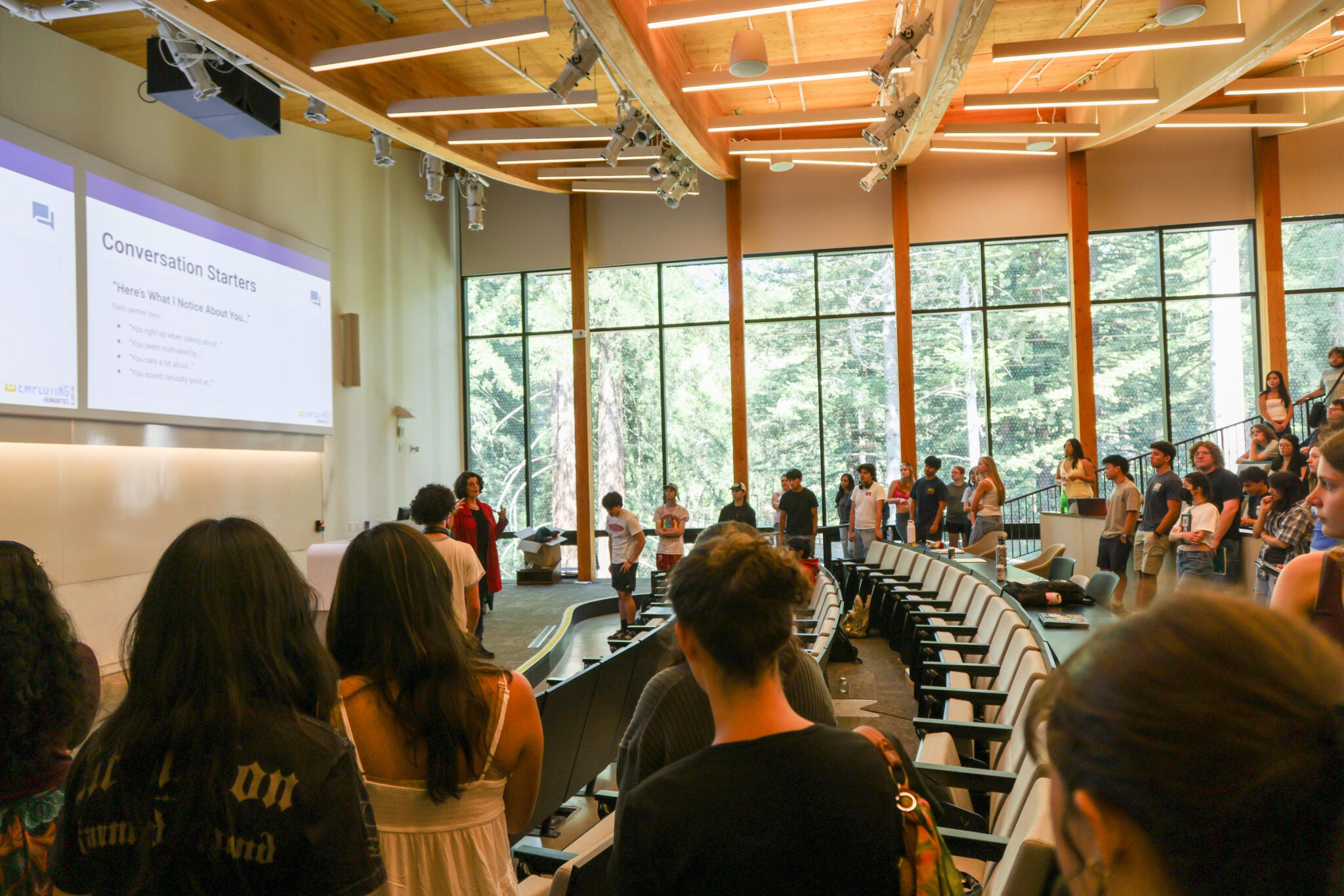
“By connecting students with alumni, campus resources, and one another, the class helps create a sense of belonging,” Biehl said. “So many students feel alienated and uncertain right now.”
The course blends career preparation with interactive exercises, peer discussions, and guest speakers from a wide range of professions. Students hear candid stories about career uncertainty, reinvention, burnout, work-life balance, and the nonlinear paths many professionals ultimately take.
“What I’ve noticed is that students across disciplines are hungry for conversations that are a little more human than that,” Biehl said, referring to the pressure many students feel to approach college in purely transactional terms. “They want practical guidance, absolutely, but they also want help thinking about purpose, adaptability, meaning, and what kind of work will actually feel fulfilling and sustainable over time.”
Humanities Dean Jasmine Alinder spoke with students about academia and leadership, describing how she never initially planned to become a dean. Pulitzer Prize-winning investigative journalist Martha Mendoza (Kresge, ’99, independent major, journalism and education) discussed curiosity, journalism, and the emotional realities of building a meaningful career.
Doug Erickson (Cowell,’78 literature and Latin), founder of Santa Cruz Works, reflected on how his humanities background shaped his long career in tech, while former Santa Cruz mayor and current mayoral candidate Ryan Coonerty – a longtime lecturer on law and government at UC Santa Cruz – spoke candidly about realizing in law school that he did not actually want to become a lawyer.
Dillon Auyoung (Crown ’90, linguistics) encouraged students to bring their whole selves to the job market. He spoke candidly about once feeling ashamed of his Cantonese-speaking family background — yet that same cultural fluency helped him land his first job at Comcast, where managers saw him as uniquely suited to connect with residents in San Francisco’s Chinatown.
He proved his value there, rising to serve as the company’s San Francisco government affairs manager and later director of government affairs.
Arlene Maradiaga (Merill, literature, ‘26), said the guest speakers helped her consider the importance of authenticity in job interviews and how to make them into conversations.
“This course has given me insider knowledge and advice about what employers look for in applicants,” Maradiaga said. “For instance, Ryan Coonerty shared that potential employees that stand out to him are those who ask him what are some of his own failures and how he overcame those difficulties.”
She also learned that employers look for applicants who have demonstrated people skills and empathy.
Although the course was designed with humanities students in mind, enrollment has also included students from outside the Humanities Division.
“The students majoring in psychology or biology, for example, see themselves as humanists because they care deeply about human connection and interaction,” Biehl said.
She recalled one conversation with a nursing student who began considering adding a humanities minor after she and Biehl met after class and Biehl suggested thinking about illness, grief, mortality, and vulnerability through works like Leo Tolstoy’s The Death of Ivan Ilyich and Joan Didion’s The Year of Magical Thinking.
“That conversation captured exactly what I hope the course encourages,” Biehl said. “Students often think of the humanities as separate from ‘practical’ professions, when in reality they can deepen them.”
Ultimately, Biehl said she hopes the course leaves students with something deeper than professional polish.
“I hope the course helps students feel more confident, less anxious about themselves and their place on campus and in the world,” she said. “I hope the course helps them understand the value of what they’re learning during these precious four years at UC Santa Cruz.”