
The University of California secured more U.S. utility patents than any other university in the world last year, according to rankings released today by the National Academy of Inventors. The No. 1 ranking highlights UC’s unmatched record for innovation that drives societal progress and bolsters the economy. And it underscores the importance of federal funding and policy in powering America’s scientific and technological leadership on the world stage.
With 571 patents granted in 2025, UC’s patent success last year nearly doubled that of MIT, the next U.S. university on the list. UC has rights to over 6,800 active patents from the U.S. Patent and Trademark Office.
Federal funding drives innovation
Patented UC inventions are behind some of the most valuable and consequential technologies of modern life, from the smartphone in your pocket to the food on your plate to the medicine in your cabinet. These and other innovations owe their origins to the university’s longstanding partnership with the federal government, which funds over half of UC research.
“These rankings reflect the excellence and real-life impact of UC’s research ecosystem, where publicly funded discoveries are turned into new jobs, innovative industries, and everyday solutions that benefit everyone,” said UC President James B. Milliken. “We are proud that UC is once again ranked first on this list, and we will continue pursuing research to help address the world’s most pressing challenges.”
The little-known law that unleashed American innovation
As NAI’s rankings show, U.S. universities — with UC in the lead — play a crucial role in maintaining America’s lead in innovation and discovery. But it hasn’t always been this way. The federal government didn’t really start investing in academic science until World War II. And for much of the 20th century, the government owned the right to license any invention its funding helped create. Universities lacked both the means and incentive to get their faculty’s work to market, so Americans were missing out on many of the treatments and solutions that their tax dollars were helping to generate.
Two U.S. senators, Democrat Birch Bayh of Indiana and Republican Bob Dole of Kansas, spearheaded the effort to change that. They coauthored the bipartisan University and Small Business Patent Procedures Act of 1980, known as the Bayh-Dole Act, which allows universities, small businesses and nonprofits to own inventions from federally funded research and license new technology to companies. It also stipulated that universities invest a share of the revenue from licensing federally funded inventions back into innovation and commercialization. At UC, these revenues fund technology commercialization programs on every campus, driving inventions to market, where they can generate jobs and economic growth for California and the nation.
This single, simple policy change gave inventors both the incentive and the means to bring their work to market. And it worked: Before the Bayh-Dole Act, federal agencies had patented just 28,000 inventions, and just 1,400 of these had ever been licensed to companies, according to a 1998 government report. Fast forward to 2024, when U.S. universities licensed 9,500 inventions to industry — in a single year.
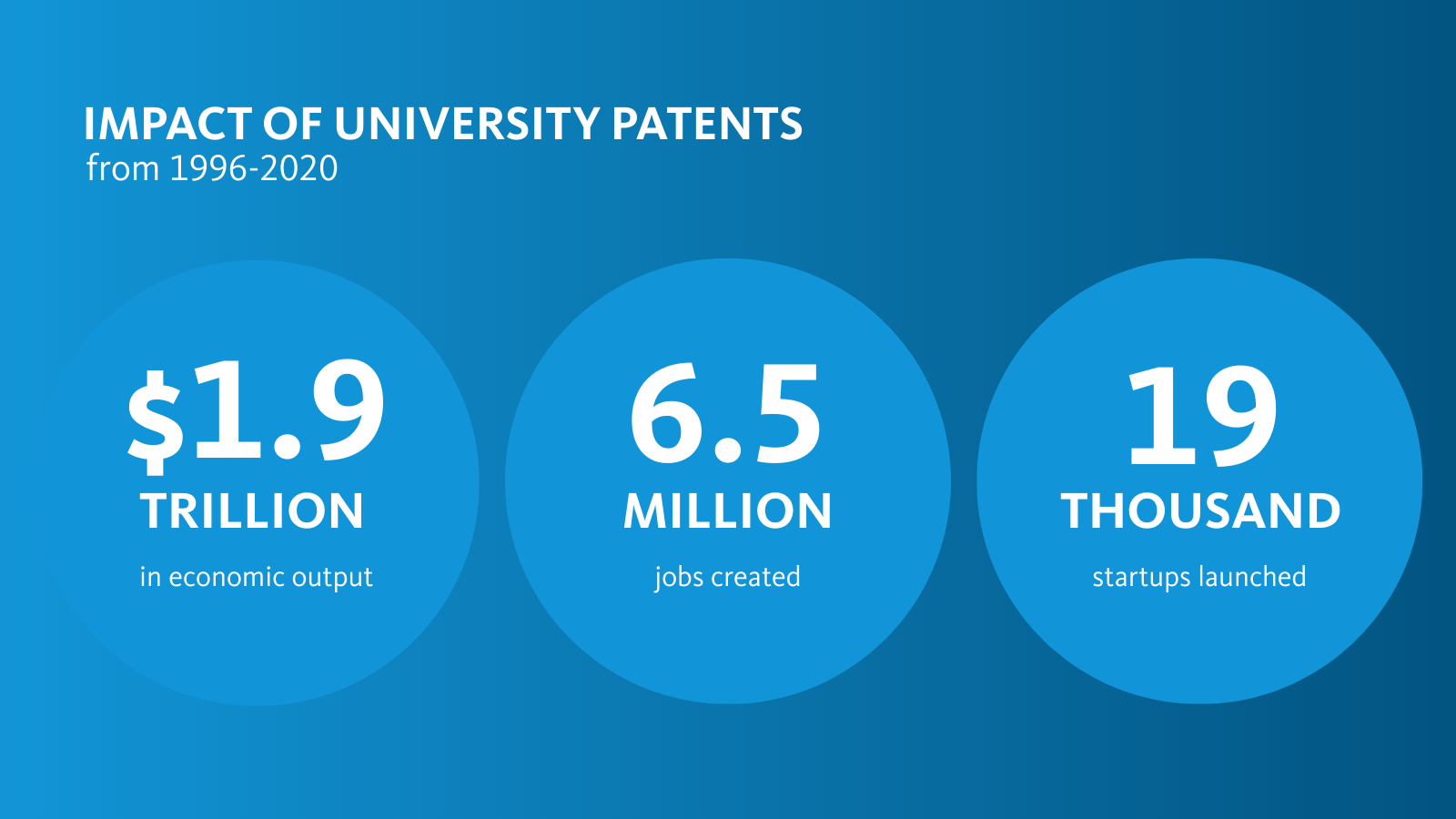
The Bayh-Dole Act sparked a university-led entrepreneurship boom that helped transform the U.S. into the world’s leading innovation-based economy. The Association of University Technology Managers finds that since 1996, inventions from U.S. universities have generated $1.9 trillion in economic output, created 6.5 million U.S. jobs and launched over 19,000 startups.
“When Congress passed the Bayh-Dole Act, the goal was clear: make sure federally funded discoveries reach the marketplace as new medicines, technologies and tools rather than gathering dust on laboratory shelves,” says UC Associate Vice President for Federal Governmental Relations Chris Harrington. “This law is an example of how smart, bipartisan federal policy can align different parts of the innovation ecosystem to deliver the maximum benefit to every American.”
About the rankings
The National Academy of Inventors is an organization comprising universities, governmental agencies and nonprofit research institutes. NAI was founded to recognize and encourage inventors with U.S. patents, enhance the visibility of academic technology and innovation, encourage the disclosure of intellectual property, educate and mentor innovative students, and to create wider public understanding of how its members’ inventions benefit society.
Released annually since 2013, NAI’s Top 100 Worldwide Universities ranking showcases the important role academic institutions play in America’s innovation ecosystem. These rankings are based on calendar year data provided by the United States Patent and Trademark Office. The University of California has held the No. 1 spot in the Top 100 Worldwide Universities rankings for 11 of the past 12 years.