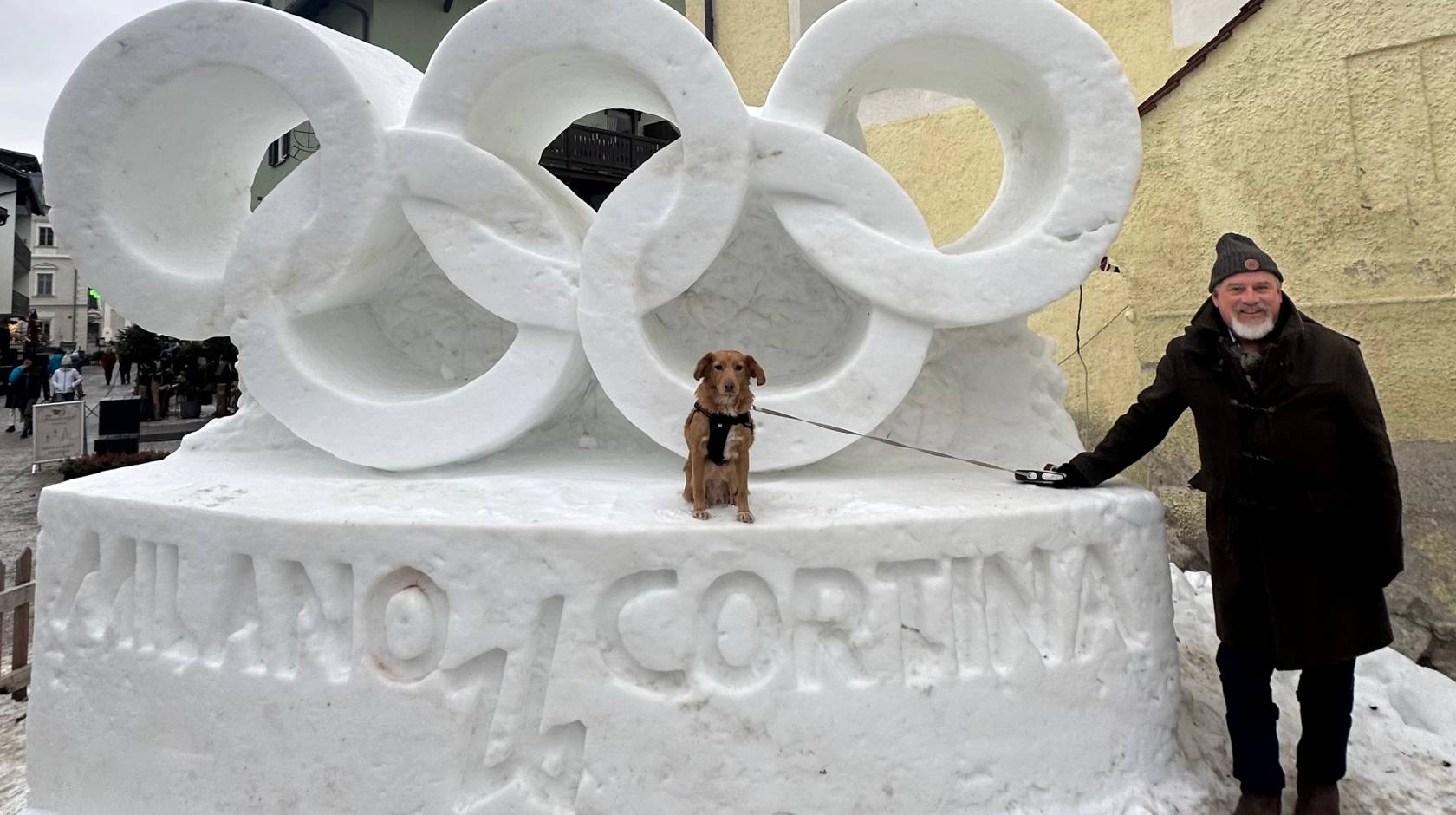
On Wednesday, Jan. 28, University of California researcher Matteo M. Garbelotto-Benzon will go for a walk in the crisp cold of Canazei, a town near where he was raised in Italy’s Dolomites mountain range. His feet may crunch fresh snow in view of the Alpine peaks that inspired his career in forestry. The difference this time? In one hand, he’ll hold the Olympic torch — and in the other the lead of S’Abba, the service dog who helped him walk, and ski, again.
Garbelotto is one of about 10,000 people chosen to take the torch on its 63-day, 7,500-mile relay journey from Olympia, Greece, to Milan, Italy, which will co-host the 2026 Winter Games with Cortina, in the Italian Alps. Garbelotto believes his and S’Abba’s relay journey could make history as perhaps the first time a service dog will walk side-by-side with a person with a mobility disability carrying the flame, something that seemed impossible to Garbelotto just years ago.
Being back home for the 2026 Winter Olympics has been on Garbelotto’s mind since the 2019 announcement that Italy had won its bid for the Games. Garbelotto grew up listening to stories of the last Olympics held in the region, the 1956 Cortina Winter Games, from his father, who grew up nearby. Thickly forested, the region is a jewel in many ways, a place where one can find stands of spruce Stradivari first chose for his violins or the frost-colored blooms of edelweiss, a fiercely protected wildflower that grows on only the rockiest, most forbidding terrain, a symbol of courage that has long nourished legends throughout the Alps. And of course, one can find thousands of people who have come from around the world to ski, a tradition still passed down by locals. “When you grow up in a village of 300 souls, with a glacier less than an hour away, skiing is in your blood,” Garbelotto says. “Skiing for people who live in the Alps is not just for the elite, it’s for everybody.”
Garbelotto enjoyed ski racing, but it wasn’t the main draw. “I simply love the sport and being outdoors in the forest,” he explains. These twin loves have nourished his career in forestry in California, his home since the 80s, where skis help him reach the remote areas he studies as a UC Berkeley professor and UC Cooperative Extension specialist. Garbelotto is famed for discovering, alongside David Rizzo of UC Davis, the previously unknown pathogen behind Sudden Oak Death, a disease that has devastated California’s coastal forests.
But Garbelotto’s world turned upside down after a serious ski accident in March 2018 partially cracked his 5th vertebrae and left him in and out of a wheelchair. Six months later, while researching in Tahoe, he experienced a major pulmonary embolism, a traumatic event he believes is connected to his accident. Recovering from both injuries a few months later in Sardinia, unsure if he’d ever be able to independently walk again, Garbelotto experienced a positive twist of fate: a puppy arrived at his door.
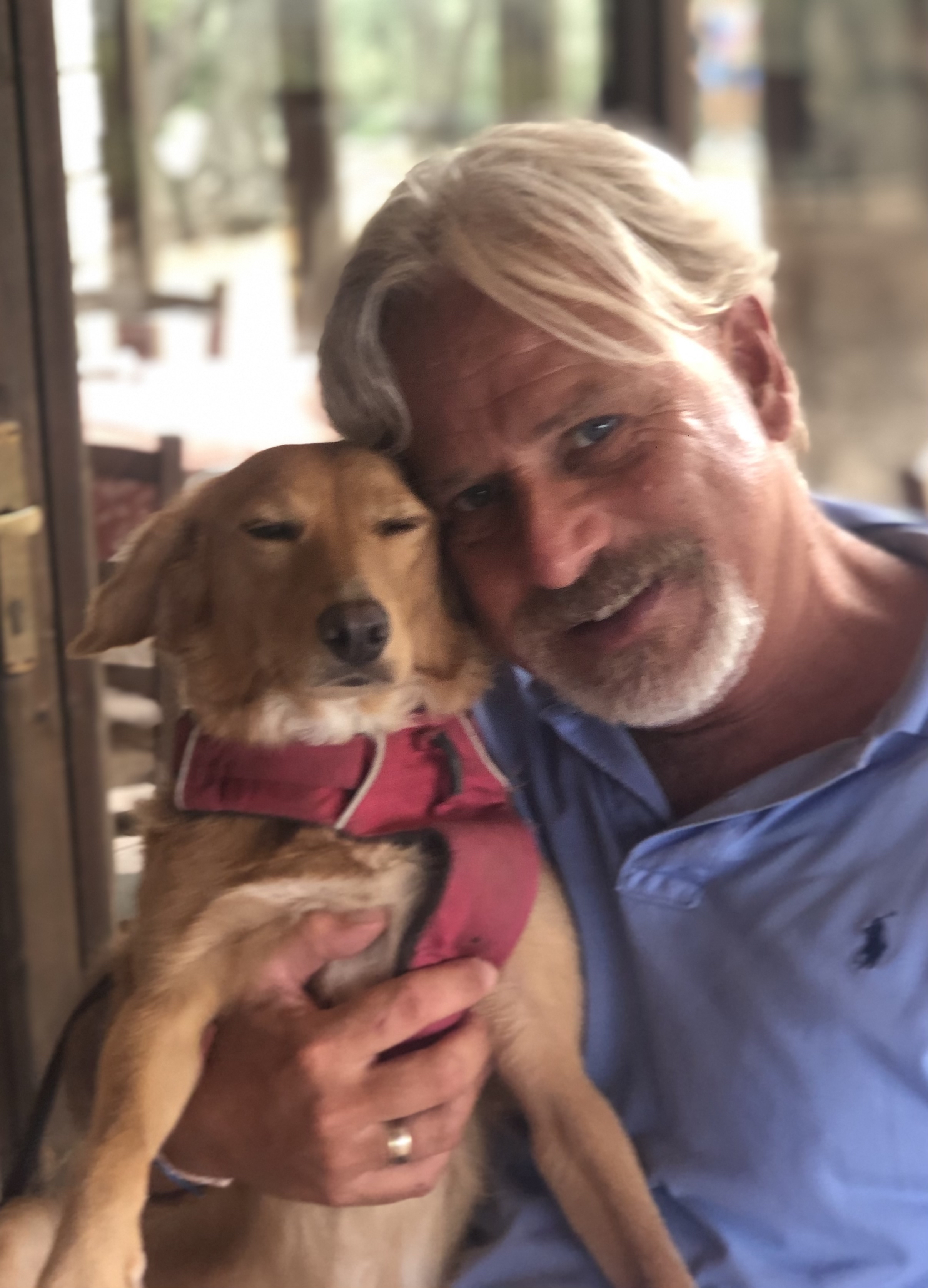
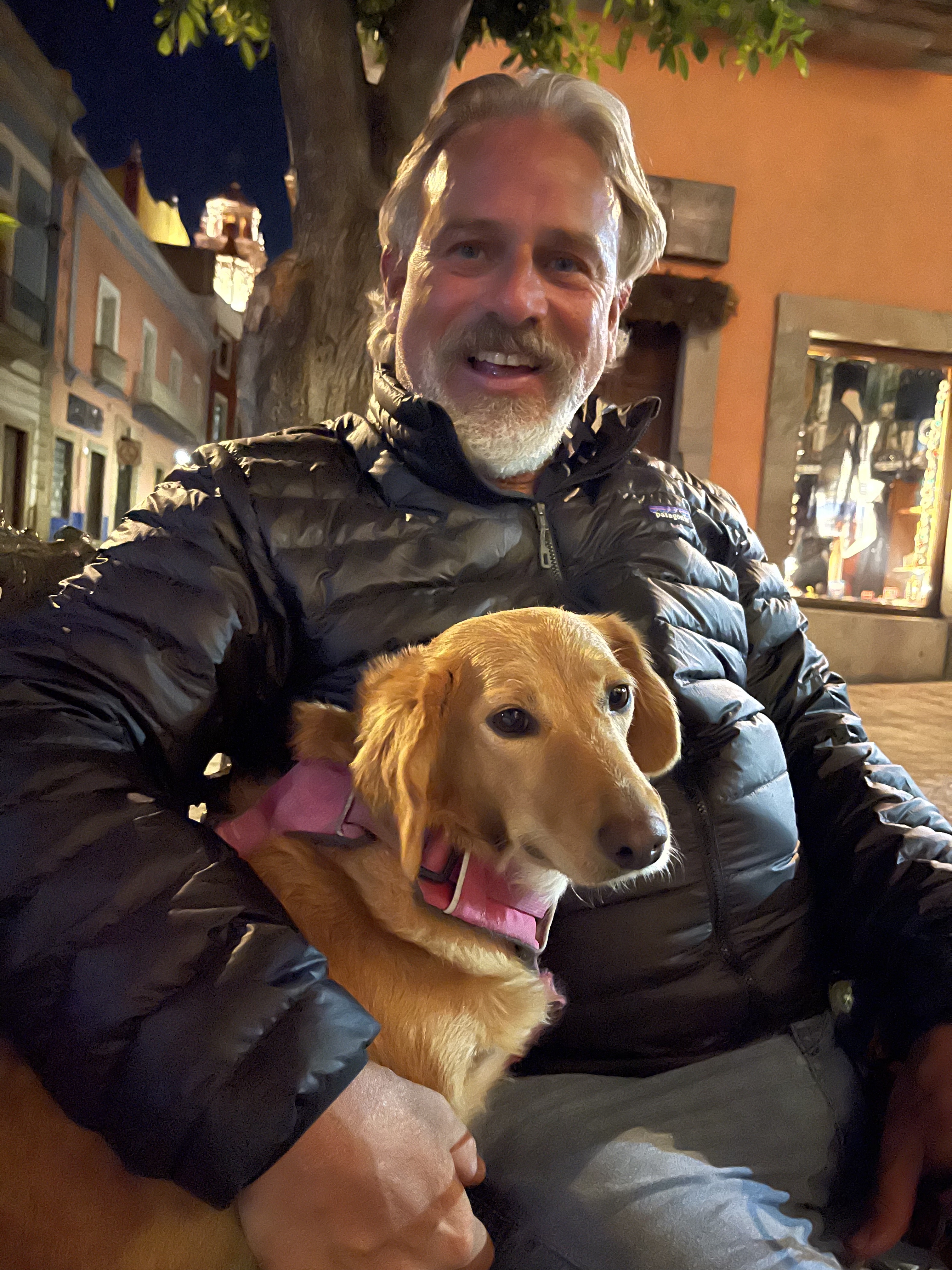
A diminutive Nova Scotia Duck Tolling Retriever mix, she had been abandoned by a neighbor who owns a nearby farm. It was love at first sight.
“I thought she could maybe help me walk better without always having to use a cane,” Garbelotto says.
Naming her S’Abba (meaning “the water” in Sardinian; Garbelotto spells her name phonetically as Saba to reflect his Ladin Venetian dialect), Garbelotto contacted a trainer and started a program to see if she might be suitable as a service dog trained for tasks around mobility and balance. S’Abba performed very well, and was able to get Garbelotto back into the field, on ski and on foot, to live out his dreams of being a student and protector of the forest. Now the two are on the precipice of another accomplishment — carrying the Olympic torch together in their home country.
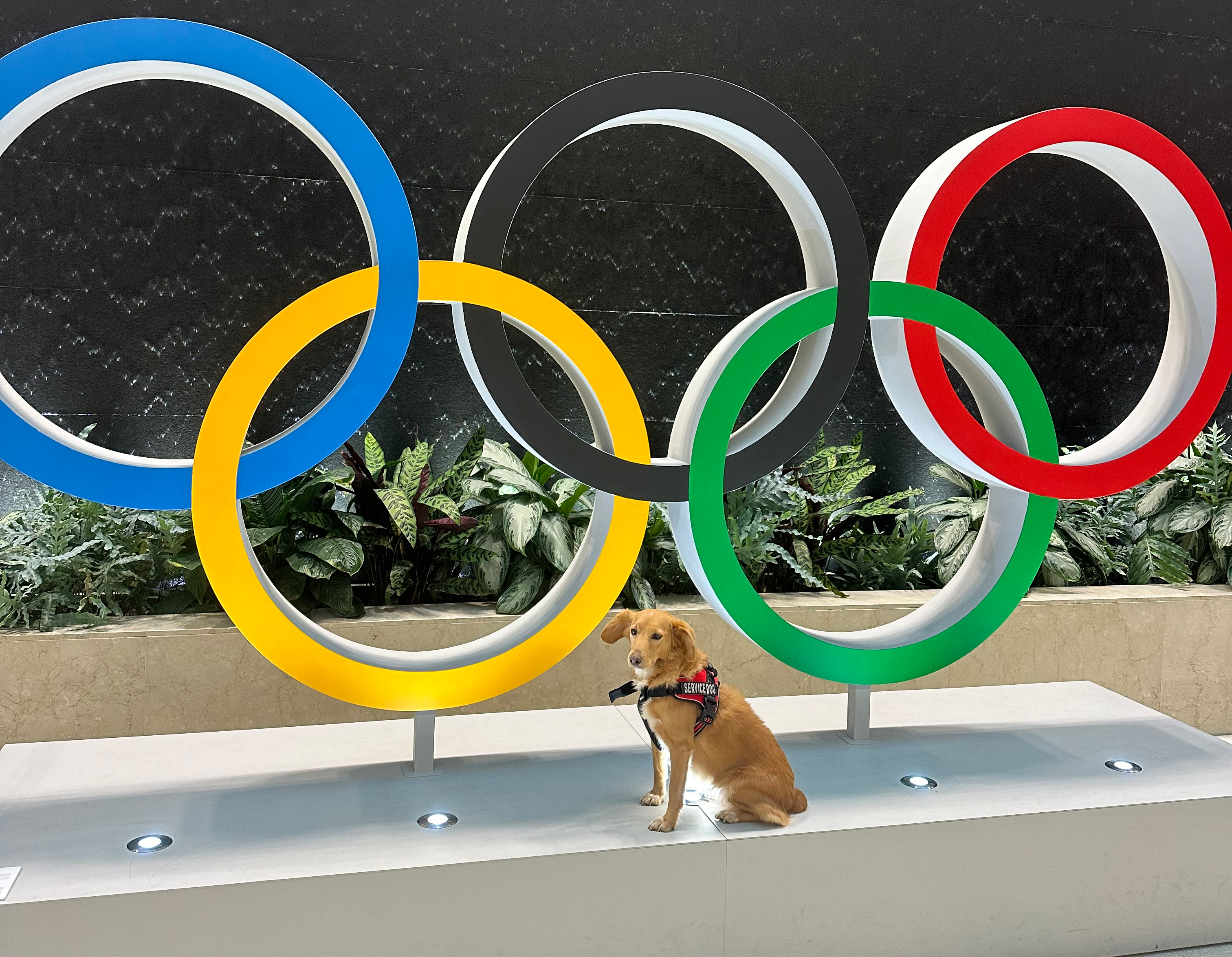
“I am so proud that S’Abba may be the first service dog to help a person with a mobility disability walk with the torch for the Olympics,” Garbelotto says. “It says so much about the importance of these companions in the world of sports. In Italy, only guide dogs for the sight-impaired are fully acknowledged, so I am really proud she was selected.”
Garbelotto wasn’t sure if they would be selected, or even where they would be asked to carry the torch if so. “I worried as an American that they would simply assign me to any place, so I was a bit nervous,” he says. “When I found out I would be carrying the torch in the Dolomites I was so happy and thankful I started crying.”